What Overthinking Is Actually Telling You (And What to Do Instead)
Dec 13, 2019Updated March 2026
You have an idea. A real one. The kind that arrives with energy behind it — a clarity you can almost reach out and touch.
And then the questions start.
Can I really pull this off? What if it's not as good as I think? What if I put it out there and it doesn't land?
At first you push past them. You keep building, keep mapping it out, keep adjusting the details. But the questions don't leave. They settle in. And the project that once felt alive starts to feel like something that needs to be just a little more finished before anyone else can see it.
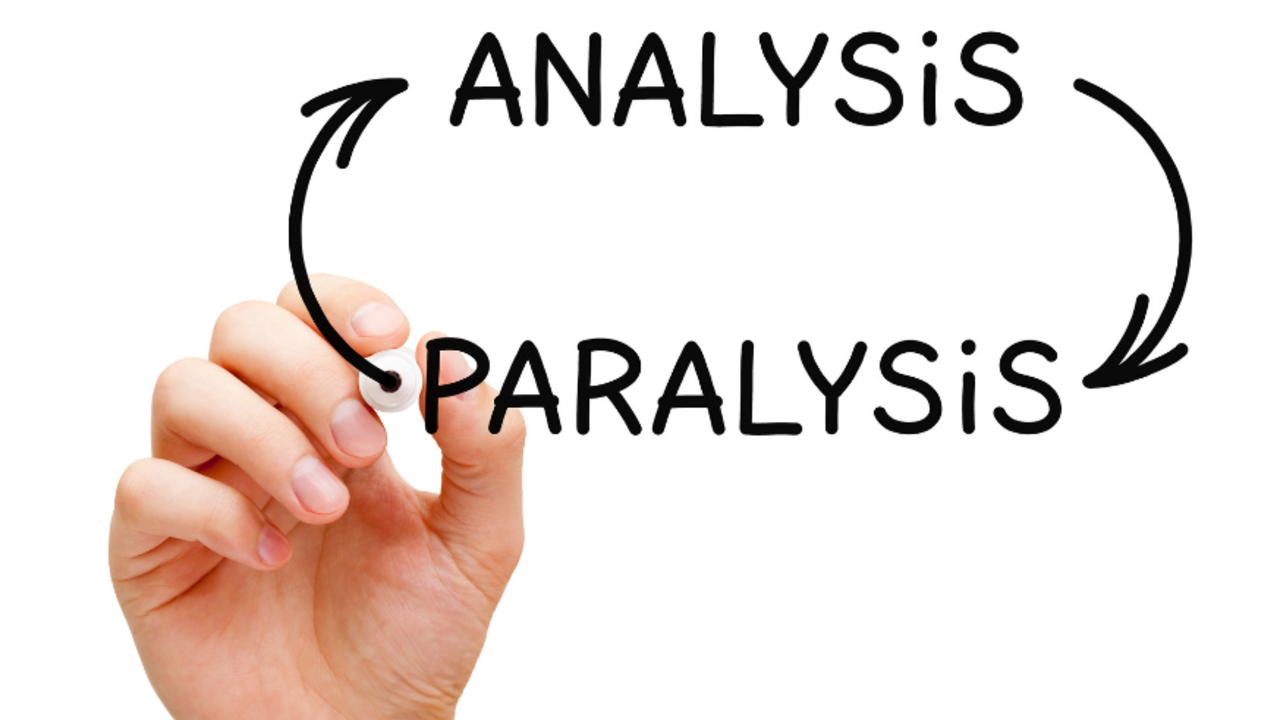
You're still working. But you're moving in circles now. Revising the same thing. Refining without moving forward. Until eventually the energy that started it all goes quiet, and the idea gets filed somewhere under probably not ready yet.
This is what overthinking looks like from the inside. And the standard advice — just act, just decide, just stop overthinking — misses what's actually happening.
Overthinking is not a character flaw
The most important reframe I can offer you: overthinking is not a failure of discipline or willpower. It is not proof that you are someone who can't follow through.
It is information. And it is asking to be read.
Your brain generates questions when something matters and when uncertainty is present. That's not malfunction — that's your brain doing exactly what it's designed to do. The spiral of "what if" is not the enemy. It's a signal that something in you is trying to get your attention before you move forward.
The question is not how do I stop this. The question is what is this actually telling me?
Two kinds of overthinking — and why the distinction matters
Not everything that looks like overthinking is the same thing underneath.
The first kind is the Lobby doing its job. The Lobby — that reactive internal space full of comparison, doubt, and worst-case scenarios — generates concerns when you're doing something new, something visible, something that has stakes. These thoughts arrive fast and loud and feel very convincing. But they aren't necessarily pointing toward a real problem. They're pointing toward the discomfort of expansion.
When this is what's happening, the move is not to push through or suppress the thoughts — it's to relate to them from a different place. Ask: Is this a thought I want to believe, or is it an invitation to remember what I actually know to be true? You don't have to believe everything your brain generates. And you don't have to act on every concern before you can move.
The second kind is your inner wisdom trying to surface something real. Sometimes the spiral of revision and refinement is your knowing that something isn't quite right — that there's a piece missing, a decision that hasn't been made cleanly yet, something worth addressing before you move forward.
The client who keeps rewriting her offer page might be Lobby noise. Or she might be sensing that her positioning still isn't clear — and her brain is correctly telling her that sending it out now won't get the result she wants.
The difference matters. Dismissing real signal as "just overthinking" means you lose the information. Treating every Lobby concern as a valid obstacle means you never move.
The move that actually works
When you notice yourself in the spiral — revising without resolving, refining without deciding, circling the same questions without answers — the move is to stop and evaluate what you're actually working with.
Not to push through. Not to stop thinking. To look at the data.
What specifically is the concern? Name it. Is it a real gap in the plan, or is it a feeling generated by the newness of what you're doing? If it's real — address it specifically and move. If it's Lobby noise — you get to choose the thought you want to run instead.
The 48-Hour Data Cycle is useful here: take the action, let the result arrive, then evaluate. Most overthinking happens in the space before any data exists — your brain is running scenarios about outcomes that haven't happened yet. The fastest way to interrupt that spiral is to generate actual data. Take the smallest version of the move. See what happens. Evaluate with curiosity, not judgment. Decide the next step from there.
That's not reckless action. That's the Momentum Loop running. Decide → Do → Have Your Own Back. The antidote to overthinking isn't less thinking. It's a clean decision followed by a real move, with a commitment to learning from whatever comes next.
What confidence actually has to do with this
Here's where the original advice about overthinking usually goes wrong: it suggests that taking action will build your confidence, and confidence will solve the overthinking.
That's backwards.
Confidence is not the boarding pass. It is always downstream of the cause already in motion. You don't take action to build confidence so you can stop overthinking. You make a decision — before the confidence arrives, before the certainty settles in, before the spiral quiets down — and the action follows from that decision.
The sequence is always: Choice → Practice → Expression.
Self-trust is the choice. The action is the practice. The confidence is what expresses itself as a result — after, not before.
When you wait for the overthinking to stop before you move, you are waiting for an effect to precede its cause. It doesn't work that way. The move comes first. The quiet comes after.
Not because you silenced the doubt. Because you decided — clearly, from the Inner Room — that you were moving regardless of it.
If you want to understand what's underneath your overthinking patterns — what's actually driving the spiral and what your next level is asking of you — the Self-Trust Identity Map is where to start. Free, about three minutes.
Ready to go deeper? Here's your next step.
If something here resonated — that's data.
Try it right now with one real thought, or go deeper and see what your next level is asking of you.
Want this in your inbox, not just this once?
Weekly insights on identity, self-trust, and building a business that holds, sent directly to you.
🔒No spam. Unsubscribe anytime.
Author
